









































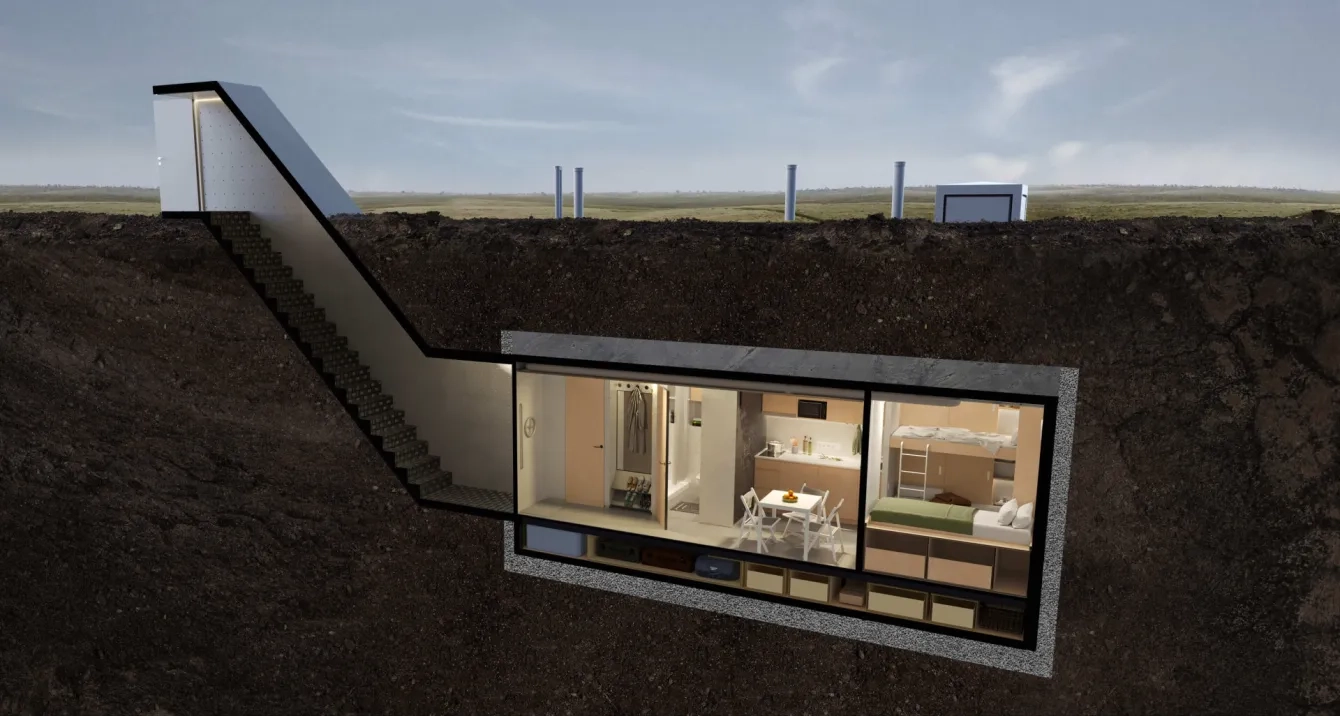
Ventilation Issues in Protective Structures
Storage facilities and bunkers, regardless of their purpose – whether they are civil protection structures, military facilities, or underground storage rooms – face a critical problem: ensuring quality air exchange in a confined space. Without proper ventilation, these structures, designed for prolonged human occupancy, may fail to fulfill their protective function due to rapid deterioration of air quality.
Air – the Number One Resource in a Shelter
When considering vital resources in the context of prolonged stays in protective structures, fresh air ranks first in criticality, surpassing even water and food. A person can survive without food for several weeks, without water for a few days, but without sufficient oxygen – only a few minutes. In a confined space, an average group of people can deplete the oxygen supply and reach critical CO₂ concentrations within a few hours.
When planning supplies for a shelter, managers often focus on issues of nutrition, water supply, medications, and energy resources, sometimes underestimating the ventilation system. However, without proper air exchange, all other supplies may become useless – a person in an environment with high CO₂ concentration and low oxygen content quickly loses efficiency, experiences cognitive function deterioration, and ultimately faces a direct threat to life.
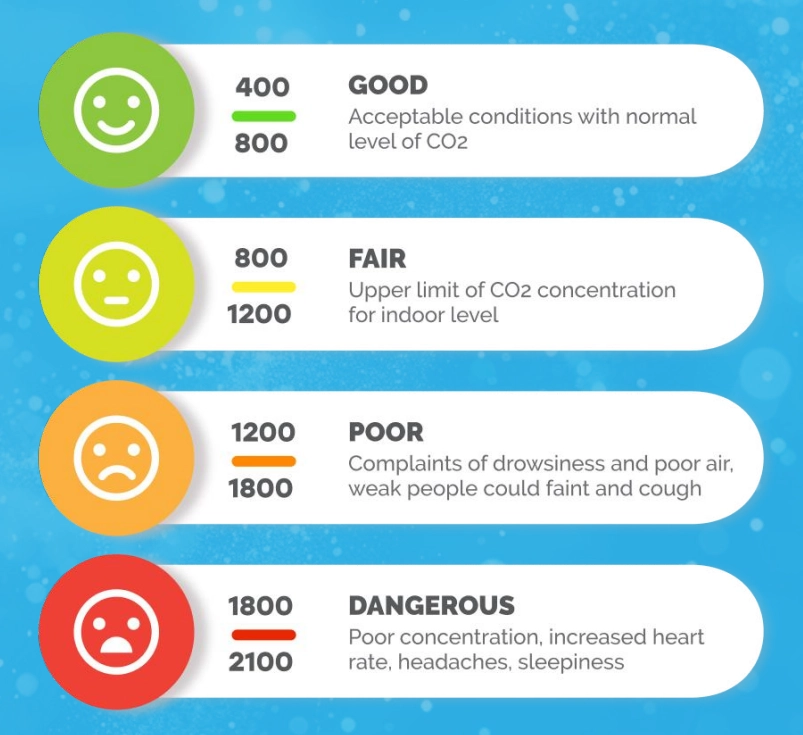
This infographic shows the levels of CO₂ (carbon dioxide) concentration in the air and their impact on humans:
- 400-800 ppm: GOOD Acceptable conditions with normal CO₂ levels
- 800-1200 ppm: FAIR Upper limit of CO₂ concentration for indoor spaces
- 1200-1800 ppm: POOR Complaints of drowsiness and poor air, weak individuals may faint and cough
- 1800-2100 ppm: HAZARDOUS Poor concentration, increased pulse, headaches, drowsiness
Note: ppm (parts per million) - a unit of measurement for CO₂ concentration in the air
That is why the supply and exhaust ventilation system should be considered critical infrastructure for the shelter, designed with the same diligence and reliability as water supply or electrical systems.
Main Problems of the Air Environment in Sealed Structures:
- Accumulation of carbon dioxide (CO₂) during prolonged human occupancy
- Reduction of oxygen levels in confined spaces
- Increased humidity, promoting the growth of mold and fungi
- Accumulation of unpleasant odors and toxic substances
- Lack of filtration from external pollutants in emergencies
- Stagnant air and overheating of rooms in summer
- Risks of hypoxia and CO₂ poisoning during prolonged stays
Solving Problems with AHUs
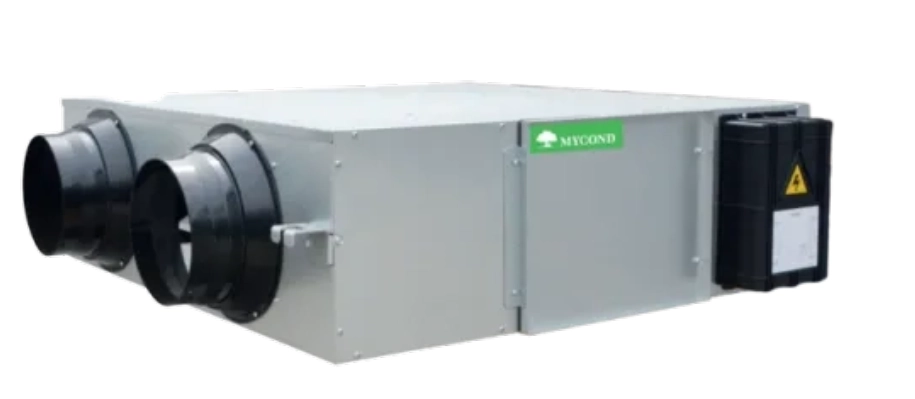
Air handling units (AHUs) are a comprehensive solution for ensuring the proper microclimate in shelters and bunkers. Their implementation addresses a number of critical issues:
Advantages of Installing AHUs:
Continuous Supply of Fresh Air
- Ensuring regulatory air exchange (at least 10 m³/hour per person)
- Maintaining optimal oxygen levels for comfortable occupancy
Removal of Contaminated Air
- Effective removal of CO₂, moisture, and other metabolic byproducts
- Reducing the risk of respiratory diseases
Air Filtration
- Protection from external pollutants (dust, allergens, radioactive particles)
- Possibility of installing specialized filters (HEPA, carbon) for cleaning from chemical and biological threats
Humidity Regulation
- Preventing condensation on walls and ceilings
- Protecting equipment and materials from corrosion and damage
Temperature Regulation
- Preventing overheating from heat generated by people and equipment
- Possibility of connecting additional heating or cooling modules
Improving Sanitary and Hygienic Conditions
- Reducing the risk of spreading infectious diseases
- Removing unpleasant odors
Efficient Energy Use
- Modern AHUs with heat recovery can save up to 75-85% of thermal energy
- Reducing heating costs in cold periods
Autonomous Operation
- Ability to operate from backup power sources
- Operating modes in various conditions (normal, emergency, autonomous)
Main Components of the AHU System for Shelters and Bunkers
A modern supply and exhaust system for protective structures consists of the following components:
- Base AHU Unit
1) Supply and exhaust fans
2) Heat exchanger (recuperator)
3) Automatic control system
4) Basic cleaning filters - Duct System
1) Main air ducts
2) Distribution elements (diffusers, grilles)
3) Regulating valves and dampers
4) Silencers - Filtration Equipment
1) Coarse cleaning filters (G4)
2) Fine cleaning filters (F7-F9)
3) Specialized filters (HEPA H13-H14)
4) Carbon filters for gas and chemical sorption - Sealing Valves
1) Check valves to prevent backdraft
2) Explosion-proof valves
3) Fire dampers - Control and Monitoring System
1) CO₂, oxygen, humidity, temperature sensors
2) Controllers and programmable modules
3) Alarm and emergency shutdown systems
4) Remote control panels - Additional Modules
1) Cooling/heating elements
2) Air dehumidifiers/humidifiers
3) UV sterilizers
4) Backup power supply systems
Alternative Solutions and Replacements
In conditions of limited resources or specific requirements, alternative components may be used:
Simplified Ventilation Systems
- Duct fans instead of a comprehensive AHU
- Separate supply and exhaust units without recovery
- Mechanical systems with manual control
Alternative Filtration Solutions
- Homemade carbon filters
- Filters using non-specialized materials (synthetic fabrics, cotton)
- Multi-layer mechanical filters
Simplified Ducts
- Flexible ducts instead of rigid metal ones
- Plastic pipes of appropriate diameter
- Improvised distribution elements
Autonomous Solutions
- Portable generators to power the system
- Handheld fans for emergencies
- Chemical air purifiers (for short-term use)
Alternative Control Systems
- Standalone battery-powered sensors
- Simplified mechanical pressure and humidity indicators
- Timers instead of automatic controllers
Conclusion
Installing supply and exhaust units in shelters and bunkers is not just a matter of comfort, but a critical necessity for ensuring the safety and health of people during prolonged stays in confined spaces. Modern AHUs offer a comprehensive solution for ensuring regulatory air exchange, filtration, and air quality control.
When designing and installing such systems, it is important to consider the specifics of the particular structure, the number of people, the duration of autonomous operation, and potential external threats. A properly selected and installed AHU system significantly enhances the protective properties of bunkers and shelters, transforming them from simple physical shelters into a full-fledged environment for prolonged safe human occupancy.


